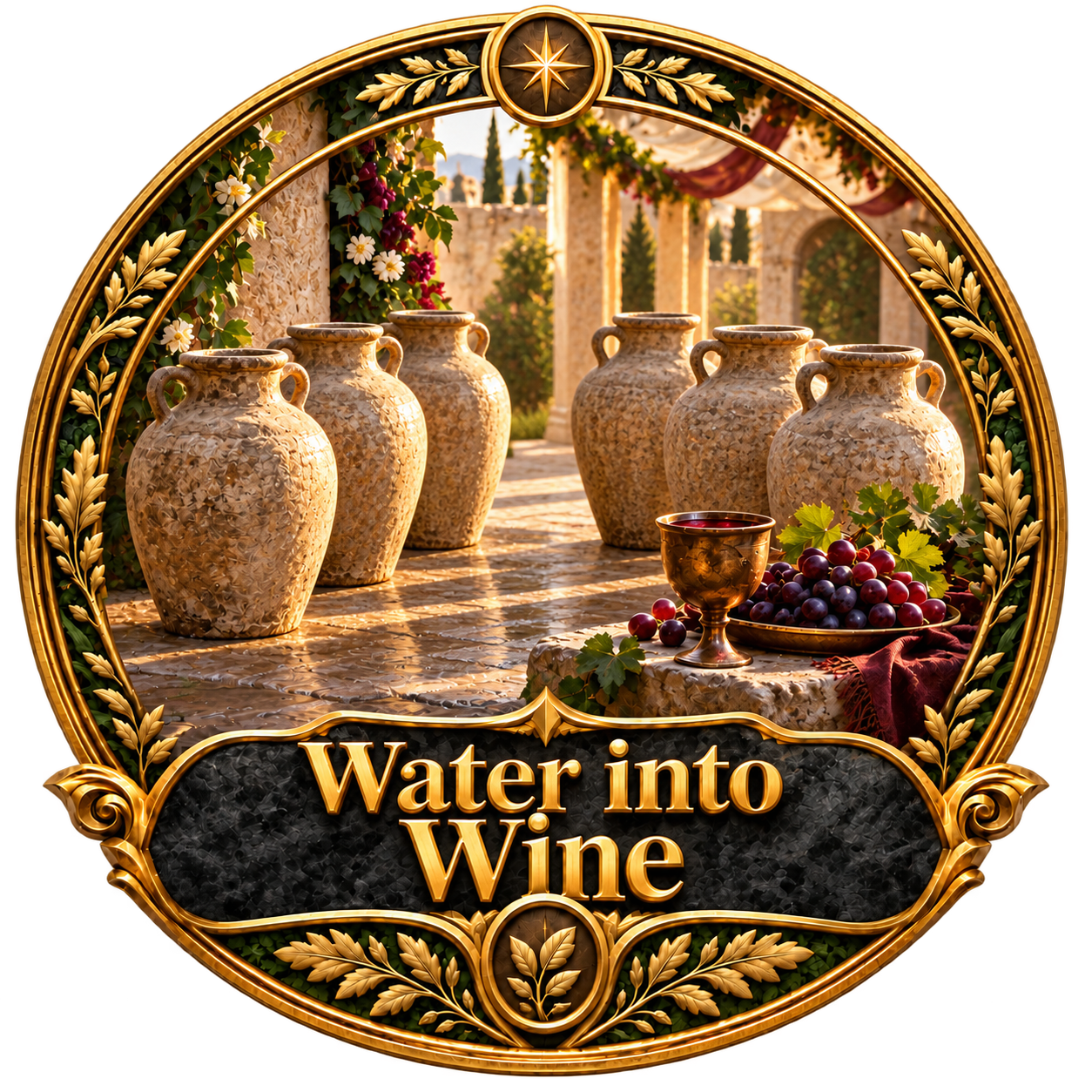
An invitation to a wedding
An ordinary celebration becomes the setting for a sign.
A wedding in Cana of Galilee provides the setting for Jesus’ first sign in John’s account. His mother is present, and Jesus and his disciples have been invited. John begins with ordinary social details before describing anything extraordinary. The invitation connects the disciples’ presence at the start with their belief at the conclusion. Read the opening slowly enough to distinguish its stated details from those supplied by paintings, films or familiar retellings. The couple’s names, the number of guests and the number of disciples attending are not given. The scene is concrete without being complete. Its purpose will become clearer when John explains what Jesus’ action reveals.
Where
Cana of Galilee—not Jerusalem or Capernaum.
John 2:1
Occasion
A wedding. The bride and bridegroom are not named in this account.
John 2:1–12
Who
Jesus’ mother is there; Jesus and his disciples are invited.
John 2:1–2
A scene within a larger beginning
John’s ‘third day’ places the wedding within the opening sequence of the Gospel. This study does not assign a modern calendar date or turn the phrase into a fact about how long every Jewish wedding lasted. The immediately supplied information is place, occasion and attendance. Begin with those observations, then let the narrative unfold before proposing a symbolic connection.
John 2:1-2
The disciples witness the sign
The disciples are invited with Jesus in verse 2 and believe in him in verse 11. That connection is easy to miss when the remembered story revolves only around the wine. Notice how the narrator frames their response without listing their names here. The event contributes to their recognition of Jesus; it is not just an isolated display of unusual power.
John 2:2-11
Leave unnamed people unnamed
A wedding is described, but the couple’s names and their relationship to Jesus are not supplied. A vivid retelling must not become an extra source of facts.
John 2:1–12
They have no wine
A need is brought to Jesus without a proposed solution.
The shortage enters the account in a brief exchange: the wine fails, and Jesus’ mother tells him they have no wine. Her words identify the need without recording a method for meeting it. The story gives no explanation for why the supply has run out and assigns no blame for the problem. We may reasonably recognise a serious concern for the hosts, but claims about their finances, planning or future reputation go beyond what John states. Follow the need into the next conversation rather than jumping immediately to the miracle. Jesus’ reply and his mother’s direction to the servants are part of the meaning of the scene.
The problem
The wine has run out. The KJV’s “wanted wine” refers to a shortage.
John 2:3
The speaker
Jesus’ mother tells him about the need.
John 2:3
The words
She says, “They have no wine.” She does not specify a miracle or a technique.
John 2:3
Bring the need into view
The sentence is short, but it changes the direction of the story. A celebration now has a lack that is brought to Jesus. The narrator leaves his mother’s exact expectations unstated. We should distinguish what she says from a confident account of every thought behind it. That discipline helps us read a familiar scene without replacing it with assumptions about what everyone must have intended.
John 2:3
Wait for the reply
The narrative does not move directly from request to abundant provision. Jesus speaks about his hour, and his mother turns the servants toward his instruction. Read that exchange as part of the event rather than an obstacle to be skipped. A study application can learn to bring a need honestly before God while allowing his purpose and response to remain larger than our proposed solution.
John 2:4-5
Observation before application
We can reflect on bringing needs to Jesus. The text does not turn this wedding into a promise that every request will be answered in the same way.
John 2:3–5
Whatever he says, do it
Jesus speaks of his hour; his mother directs the servants to him.
Jesus’ reply to his mother includes an expression that sounds different across English translations and the statement that his hour has not yet come. The line deserves attention rather than a confident reconstruction of his tone. His mother then tells the servants to do whatever he says. The exchange directs the reader toward Jesus’ authority and timing. In the wider Gospel, the language of his hour develops in relation to his glorification, but that larger connection should not flatten the immediate dialogue into a simple formula. Here the servants are about to receive particular instructions, and his mother points them toward the one who gives them.
Jesus’ reply
He says his hour has not yet come.
John 2:4
A change of audience
His mother then speaks to the servants.
John 2:5
The instruction
The servants are directed to do whatever Jesus tells them.
John 2:5
Read the hour within John
John later records Jesus announcing that the hour has come for the Son of Man to be glorified. That passage helps us recognise a developing theme. It does not remove every interpretive question from Cana’s brief reply. Compare the wording and sequence before asserting exactly how his mother understood it.
John 12:23-24
The servants are directed to Jesus
His mother does not tell the servants to manufacture wine or disclose a procedure of her own. Her instruction is to attend to Jesus, whose commands follow. The narrative records a response to his word while leaving the mechanism of the sign undescribed. For reflection, distinguish readiness to respond from the expectation of knowing every detail in advance.
John 2:5-8
Do not invent the missing dialogue
John does not record a debate, an apology, or an explanation of the exact moment his hour will come in these two verses. Note the question without supplying missing dialogue.
John 2:4–5
Six jars of stone
John slows down to describe the vessels already standing there.
John pauses to describe six stone water jars standing there for Jewish purification, with a capacity expressed as two or three measures each. The number, material, customary use and approximate capacity are all part of the account. Their prominence invites reflection, but observation must come first. The text does not explicitly say that the number six has one particular symbolic meaning, nor that the jars had previously held wine. Their association with purification belongs to John’s scene. Some Christian readings explore a larger relationship between purification and the new provision Jesus brings; that is an interpretive connection to examine, not an additional sentence in verse 6.
Number & material
Six water jars, made of stone.
John 2:6
Purpose
They are set there in connection with Jewish purification.
John 2:6
Capacity
Each holds two or three measures. The KJV calls these “firkins”; WEB uses “metretes.”
John 2:6
Let the vessel description remain precise
Six is the number the narrator gives, and stone is the material. The capacity is a range for each vessel. If you consult modern conversions, remember that they are estimates based on ancient measures rather than another biblical number. The key narrative effect is abundant capacity, not a requirement to calculate one exact total from the verse.
John 2:6
Connect detail with conclusion
The jars matter because they belong to the sequence through which Jesus’ sign is narrated. Their water is followed by wine tasted by the ruler, and the account ends with revealed glory and belief. Symbolic proposals should help illuminate that movement, not become a rival focus in which the objects eclipse Jesus. The emblem preserves six jars as a textual detail without claiming to reconstruct their appearance.
John 2:6-11
A detail is not automatically an allegory
Readers may explore theological connections, but this verse itself does not give a coded meaning to each jar. The quiz tests the stated details, not a preferred symbolism.
John 2:6
John 2:11
Filled to the brim
An instruction. A response. A precise detail about the water.
Jesus tells the servants to fill the water jars with water, and they fill them to the brim. He then tells them to draw some out and take it to the ruler of the feast; they carry it. The account is direct about the instructions and the response. It is restrained about the transformation itself. John does not describe an incantation, the appearance of the water changing colour or an exact instant at which every jar becomes wine. A careful retelling can honour both the clarity and the restraint of the passage. The servants do what is said; the sign’s result is disclosed when the ruler tastes it.
What goes in
Jesus tells them to fill the jars with water.
John 2:7
How full
They fill the jars to the brim.
John 2:7
What comes next
They draw out and carry it to the ruler of the feast.
John 2:8
Follow command and response
The paired instructions and actions give the scene its rhythm: fill, then draw and carry. The detail ‘to the brim’ emphasises the completed filling. It does not mean that the servants’ effort earns divine power or that obedience gives them control over the outcome. The story names Jesus as the one who does the sign in its conclusion.
John 2:7-11
Notice what is not staged
A visual retelling must choose how to portray an event the narrator leaves undescribed. That artistic choice should not be confused with evidence from the verse. The text takes the reader from water in the filling instruction to water made wine in the tasting scene. We can affirm what the account says without supplying a mechanism it does not offer.
John 2:7-9
Obedience is visible; the mechanism is not
The servants’ actions are described. The precise instant and physical process of transformation are not. An animation can illustrate the story but cannot supply those missing facts.
John 2:7–9
A taste. A hidden source.
The ruler tastes the result; the servants know where it came from.
The ruler of the feast tastes the water that has become wine. John then marks a difference in knowledge: the ruler does not know where it comes from, while the servants who drew the water do. The reader has followed the instructions and shares information the ruler lacks. He calls the bridegroom, so his next comment is addressed to someone whom the narrative has not identified as the source of the sign. This difference between appearance and knowledge makes the scene more than a report of flavour. Follow who knows, who speaks and whom each speech addresses before drawing a conclusion about recognition or praise.
What is tasted
Water that has become wine.
John 2:9
Who does not know
The ruler of the feast does not know where it came from.
John 2:9
Who does know
The servants who drew the water know its source.
John 2:9
The reader knows more than the ruler
The ruler can assess the wine’s quality without understanding its origin. The servants know the source of what they carried, though John does not give a detailed account of everything they understand about Jesus. Keep these claims distinct. The verse explicitly contrasts knowledge of origin; it does not tell us that every person present reaches the same understanding at the same moment.
John 2:9
Trace the address of the next sentence
The ruler calls the bridegroom and speaks to him about the unusual serving order. If a retelling makes the ruler turn to Jesus in amazement, it changes the scene. The narrator will identify Jesus’ sign and the disciples’ response in verse 11. Reading character speech alongside the narrator’s conclusion helps us avoid making one person’s limited knowledge the final explanation.
John 2:9-11
Knowing the source is not a description of the process
John tells us that the servants knew where it came from. He does not say they saw the exact instant of transformation or understood every aspect of the sign.
John 2:9
The good wine until now
A surprising reversal in the order of serving.
The ruler expresses surprise that the good wine has been kept until now. He describes an expected serving order and contrasts it with what he has tasted. His words testify to quality while also reflecting his lack of knowledge about its source. Read this as speech within the narrative, not as John issuing a moral instruction about drinking. The story does not require us to infer the condition of every guest from the ruler’s general observation. Its next sentence identifies the sign’s significance in Jesus’ revealed glory and the disciples’ belief. The abundance and quality belong within that larger focus.
The usual order
The ruler describes good wine being served first, followed by inferior wine.
John 2:10
His surprise
He says the good wine has been kept until now.
John 2:10
The listener
His remark is addressed to the bridegroom.
John 2:9–10
Distinguish speech from endorsement
A biblical narrative can record a character’s observation without turning every element of it into a command. The ruler’s surprise depends on the contrast between customary order and the wine now served. His comment does not settle every Christian question concerning alcohol. Those questions require attention to wider Scripture and context rather than an isolated phrase made to carry more than this scene gives it.
John 2:9-10
Read the quality toward the sign
The wine is not described as barely sufficient. Its quality contributes to the surprise and to the sense of generous provision. Yet the narrator’s stated conclusion concerns Jesus. A reasonable reflection can receive the abundance as part of the scene while avoiding a promise that Jesus will make every celebration or personal plan more materially impressive.
John 2:10-11
A reported custom is not a command
The ruler’s comment about people drinking freely is part of his comparison. The passage does not instruct the reader to become intoxicated or give a chemical analysis of the wine.
John 2:10
The sign points to Jesus
Glory revealed. Disciples believing. John tells us why it matters.
John now names the meaning of the event: this beginning of signs takes place in Cana, Jesus manifests his glory, and his disciples believe in him. The narrator does not leave the reader to treat the wine as an isolated wonder or the jars as the story’s central mystery. The sign points toward the identity of Jesus. Verse 12 closes the scene with a short stay in Capernaum involving his mother, brothers and disciples. Return to the opening after reading this conclusion. The guests’ invitation has become the setting for a disclosure that deepens the disciples’ response to the one they follow.
The actor
Jesus is the one who does this beginning of signs.
John 2:11
What is revealed
His glory is made known.
John 2:11
The response
His disciples believe in him.
John 2:11
Let John state the purpose
John 20:30–31 explains that selected signs have been written so that readers may believe that Jesus is the Christ, the Son of God, and have life in his name. That wider statement helps locate Cana within the Gospel’s purpose. The detail of the event matters, but the detail serves a witness to Jesus rather than a fascination with unexplained power for its own sake.
John 20:30-31
Review the scene as one account
Retell John 2:1–12 with five movements: setting, need and reply, instructions, tasting and surprise, and the narrator’s conclusion. Mark where you are reporting a verse and where you are offering an interpretation. Finish by asking what the sign invites you to recognise about Jesus. That question brings the study back to the emphasis John explicitly supplies.
John 2:1-12
Do not turn “his disciples” into “every guest”
John identifies the disciples as believing. He does not describe the response of every wedding guest, and he does not name the couple.
John 2:11
σημεῖον
Transliteration: sēmeion
Strong’s number: G4592
Sign
A sign or identifying indication. In John 2:11, the sign is linked with Jesus revealing his glory and the disciples believing in him. The Greek form in the verse is plural: sēmeiōn, “of signs.”
ὑδρία
Transliteration: hydria
Strong’s number: G5201
Water jar
A vessel for water. In this story John identifies the jars as stone and connects them with purification. The dictionary word does not itself supply an allegorical meaning.
δόξα
Transliteration: doxa
Strong’s number: G1391
Glory
Glory or honor. John says Jesus manifested—made known—his glory through this sign. That conclusion keeps attention on who Jesus is.
πιστεύω
Transliteration: pisteuō
Strong’s number: G4100
Believe / trust
To believe or trust. John 2:11 says the disciples believed in Jesus. The form in the verse, episteusan, describes their response; pisteuō is the dictionary form.
John 2:1
1 And the third day there was a marriage in Cana of Galilee; and the mother of Jesus was there:
John 2:1–2
1 And the third day there was a marriage in Cana of Galilee; and the mother of Jesus was there:
2 And both Jesus was called, and his disciples, to the marriage.
John 2:1–3
1 And the third day there was a marriage in Cana of Galilee; and the mother of Jesus was there:
2 And both Jesus was called, and his disciples, to the marriage.
3 And when they wanted wine, the mother of Jesus saith unto him, They have no wine.
John 2:1–4
1 And the third day there was a marriage in Cana of Galilee; and the mother of Jesus was there:
2 And both Jesus was called, and his disciples, to the marriage.
3 And when they wanted wine, the mother of Jesus saith unto him, They have no wine.
4 Jesus saith unto her, Woman, what have I to do with thee? mine hour is not yet come.
John 2:1–5
1 And the third day there was a marriage in Cana of Galilee; and the mother of Jesus was there:
2 And both Jesus was called, and his disciples, to the marriage.
3 And when they wanted wine, the mother of Jesus saith unto him, They have no wine.
4 Jesus saith unto her, Woman, what have I to do with thee? mine hour is not yet come.
5 His mother saith unto the servants, Whatsoever he saith unto you, do [it].
John 2:1–6
1 And the third day there was a marriage in Cana of Galilee; and the mother of Jesus was there:
2 And both Jesus was called, and his disciples, to the marriage.
3 And when they wanted wine, the mother of Jesus saith unto him, They have no wine.
4 Jesus saith unto her, Woman, what have I to do with thee? mine hour is not yet come.
5 His mother saith unto the servants, Whatsoever he saith unto you, do [it].
6 And there were set there six waterpots of stone, after the manner of the purifying of the Jews, containing two or three firkins apiece.
John 2:1–7
1 And the third day there was a marriage in Cana of Galilee; and the mother of Jesus was there:
2 And both Jesus was called, and his disciples, to the marriage.
3 And when they wanted wine, the mother of Jesus saith unto him, They have no wine.
4 Jesus saith unto her, Woman, what have I to do with thee? mine hour is not yet come.
5 His mother saith unto the servants, Whatsoever he saith unto you, do [it].
6 And there were set there six waterpots of stone, after the manner of the purifying of the Jews, containing two or three firkins apiece.
7 Jesus saith unto them, Fill the waterpots with water. And they filled them up to the brim.
John 2:1–8
1 And the third day there was a marriage in Cana of Galilee; and the mother of Jesus was there:
2 And both Jesus was called, and his disciples, to the marriage.
3 And when they wanted wine, the mother of Jesus saith unto him, They have no wine.
4 Jesus saith unto her, Woman, what have I to do with thee? mine hour is not yet come.
5 His mother saith unto the servants, Whatsoever he saith unto you, do [it].
6 And there were set there six waterpots of stone, after the manner of the purifying of the Jews, containing two or three firkins apiece.
7 Jesus saith unto them, Fill the waterpots with water. And they filled them up to the brim.
8 And he saith unto them, Draw out now, and bear unto the governor of the feast. And they bare [it].
John 2:1–9
1 And the third day there was a marriage in Cana of Galilee; and the mother of Jesus was there:
2 And both Jesus was called, and his disciples, to the marriage.
3 And when they wanted wine, the mother of Jesus saith unto him, They have no wine.
4 Jesus saith unto her, Woman, what have I to do with thee? mine hour is not yet come.
5 His mother saith unto the servants, Whatsoever he saith unto you, do [it].
6 And there were set there six waterpots of stone, after the manner of the purifying of the Jews, containing two or three firkins apiece.
7 Jesus saith unto them, Fill the waterpots with water. And they filled them up to the brim.
8 And he saith unto them, Draw out now, and bear unto the governor of the feast. And they bare [it].
9 When the ruler of the feast had tasted the water that was made wine, and knew not whence it was: (but the servants which drew the water knew;) the governor of the feast called the bridegroom,
John 2:1–10
1 And the third day there was a marriage in Cana of Galilee; and the mother of Jesus was there:
2 And both Jesus was called, and his disciples, to the marriage.
3 And when they wanted wine, the mother of Jesus saith unto him, They have no wine.
4 Jesus saith unto her, Woman, what have I to do with thee? mine hour is not yet come.
5 His mother saith unto the servants, Whatsoever he saith unto you, do [it].
6 And there were set there six waterpots of stone, after the manner of the purifying of the Jews, containing two or three firkins apiece.
7 Jesus saith unto them, Fill the waterpots with water. And they filled them up to the brim.
8 And he saith unto them, Draw out now, and bear unto the governor of the feast. And they bare [it].
9 When the ruler of the feast had tasted the water that was made wine, and knew not whence it was: (but the servants which drew the water knew;) the governor of the feast called the bridegroom,
10 And saith unto him, Every man at the beginning doth set forth good wine; and when men have well drunk, then that which is worse: [but] thou hast kept the good wine until now.
John 2:1–11
1 And the third day there was a marriage in Cana of Galilee; and the mother of Jesus was there:
2 And both Jesus was called, and his disciples, to the marriage.
3 And when they wanted wine, the mother of Jesus saith unto him, They have no wine.
4 Jesus saith unto her, Woman, what have I to do with thee? mine hour is not yet come.
5 His mother saith unto the servants, Whatsoever he saith unto you, do [it].
6 And there were set there six waterpots of stone, after the manner of the purifying of the Jews, containing two or three firkins apiece.
7 Jesus saith unto them, Fill the waterpots with water. And they filled them up to the brim.
8 And he saith unto them, Draw out now, and bear unto the governor of the feast. And they bare [it].
9 When the ruler of the feast had tasted the water that was made wine, and knew not whence it was: (but the servants which drew the water knew;) the governor of the feast called the bridegroom,
10 And saith unto him, Every man at the beginning doth set forth good wine; and when men have well drunk, then that which is worse: [but] thou hast kept the good wine until now.
11 This beginning of miracles did Jesus in Cana of Galilee, and manifested forth his glory; and his disciples believed on him.
John 2:1–12
1 And the third day there was a marriage in Cana of Galilee; and the mother of Jesus was there:
2 And both Jesus was called, and his disciples, to the marriage.
3 And when they wanted wine, the mother of Jesus saith unto him, They have no wine.
4 Jesus saith unto her, Woman, what have I to do with thee? mine hour is not yet come.
5 His mother saith unto the servants, Whatsoever he saith unto you, do [it].
6 And there were set there six waterpots of stone, after the manner of the purifying of the Jews, containing two or three firkins apiece.
7 Jesus saith unto them, Fill the waterpots with water. And they filled them up to the brim.
8 And he saith unto them, Draw out now, and bear unto the governor of the feast. And they bare [it].
9 When the ruler of the feast had tasted the water that was made wine, and knew not whence it was: (but the servants which drew the water knew;) the governor of the feast called the bridegroom,
10 And saith unto him, Every man at the beginning doth set forth good wine; and when men have well drunk, then that which is worse: [but] thou hast kept the good wine until now.
11 This beginning of miracles did Jesus in Cana of Galilee, and manifested forth his glory; and his disciples believed on him.
12 ¶ After this he went down to Capernaum, he, and his mother, and his brethren, and his disciples: and they continued there not many days.
John 2:2
2 And both Jesus was called, and his disciples, to the marriage.
John 2:2–3
2 And both Jesus was called, and his disciples, to the marriage.
3 And when they wanted wine, the mother of Jesus saith unto him, They have no wine.
John 2:2–4
2 And both Jesus was called, and his disciples, to the marriage.
3 And when they wanted wine, the mother of Jesus saith unto him, They have no wine.
4 Jesus saith unto her, Woman, what have I to do with thee? mine hour is not yet come.
John 2:2–5
2 And both Jesus was called, and his disciples, to the marriage.
3 And when they wanted wine, the mother of Jesus saith unto him, They have no wine.
4 Jesus saith unto her, Woman, what have I to do with thee? mine hour is not yet come.
5 His mother saith unto the servants, Whatsoever he saith unto you, do [it].
John 2:2–6
2 And both Jesus was called, and his disciples, to the marriage.
3 And when they wanted wine, the mother of Jesus saith unto him, They have no wine.
4 Jesus saith unto her, Woman, what have I to do with thee? mine hour is not yet come.
5 His mother saith unto the servants, Whatsoever he saith unto you, do [it].
6 And there were set there six waterpots of stone, after the manner of the purifying of the Jews, containing two or three firkins apiece.
John 2:2–7
2 And both Jesus was called, and his disciples, to the marriage.
3 And when they wanted wine, the mother of Jesus saith unto him, They have no wine.
4 Jesus saith unto her, Woman, what have I to do with thee? mine hour is not yet come.
5 His mother saith unto the servants, Whatsoever he saith unto you, do [it].
6 And there were set there six waterpots of stone, after the manner of the purifying of the Jews, containing two or three firkins apiece.
7 Jesus saith unto them, Fill the waterpots with water. And they filled them up to the brim.
John 2:2–8
2 And both Jesus was called, and his disciples, to the marriage.
3 And when they wanted wine, the mother of Jesus saith unto him, They have no wine.
4 Jesus saith unto her, Woman, what have I to do with thee? mine hour is not yet come.
5 His mother saith unto the servants, Whatsoever he saith unto you, do [it].
6 And there were set there six waterpots of stone, after the manner of the purifying of the Jews, containing two or three firkins apiece.
7 Jesus saith unto them, Fill the waterpots with water. And they filled them up to the brim.
8 And he saith unto them, Draw out now, and bear unto the governor of the feast. And they bare [it].
John 2:2–9
2 And both Jesus was called, and his disciples, to the marriage.
3 And when they wanted wine, the mother of Jesus saith unto him, They have no wine.
4 Jesus saith unto her, Woman, what have I to do with thee? mine hour is not yet come.
5 His mother saith unto the servants, Whatsoever he saith unto you, do [it].
6 And there were set there six waterpots of stone, after the manner of the purifying of the Jews, containing two or three firkins apiece.
7 Jesus saith unto them, Fill the waterpots with water. And they filled them up to the brim.
8 And he saith unto them, Draw out now, and bear unto the governor of the feast. And they bare [it].
9 When the ruler of the feast had tasted the water that was made wine, and knew not whence it was: (but the servants which drew the water knew;) the governor of the feast called the bridegroom,
John 2:2–10
2 And both Jesus was called, and his disciples, to the marriage.
3 And when they wanted wine, the mother of Jesus saith unto him, They have no wine.
4 Jesus saith unto her, Woman, what have I to do with thee? mine hour is not yet come.
5 His mother saith unto the servants, Whatsoever he saith unto you, do [it].
6 And there were set there six waterpots of stone, after the manner of the purifying of the Jews, containing two or three firkins apiece.
7 Jesus saith unto them, Fill the waterpots with water. And they filled them up to the brim.
8 And he saith unto them, Draw out now, and bear unto the governor of the feast. And they bare [it].
9 When the ruler of the feast had tasted the water that was made wine, and knew not whence it was: (but the servants which drew the water knew;) the governor of the feast called the bridegroom,
10 And saith unto him, Every man at the beginning doth set forth good wine; and when men have well drunk, then that which is worse: [but] thou hast kept the good wine until now.
John 2:2–11
2 And both Jesus was called, and his disciples, to the marriage.
3 And when they wanted wine, the mother of Jesus saith unto him, They have no wine.
4 Jesus saith unto her, Woman, what have I to do with thee? mine hour is not yet come.
5 His mother saith unto the servants, Whatsoever he saith unto you, do [it].
6 And there were set there six waterpots of stone, after the manner of the purifying of the Jews, containing two or three firkins apiece.
7 Jesus saith unto them, Fill the waterpots with water. And they filled them up to the brim.
8 And he saith unto them, Draw out now, and bear unto the governor of the feast. And they bare [it].
9 When the ruler of the feast had tasted the water that was made wine, and knew not whence it was: (but the servants which drew the water knew;) the governor of the feast called the bridegroom,
10 And saith unto him, Every man at the beginning doth set forth good wine; and when men have well drunk, then that which is worse: [but] thou hast kept the good wine until now.
11 This beginning of miracles did Jesus in Cana of Galilee, and manifested forth his glory; and his disciples believed on him.
John 2:2–12
2 And both Jesus was called, and his disciples, to the marriage.
3 And when they wanted wine, the mother of Jesus saith unto him, They have no wine.
4 Jesus saith unto her, Woman, what have I to do with thee? mine hour is not yet come.
5 His mother saith unto the servants, Whatsoever he saith unto you, do [it].
6 And there were set there six waterpots of stone, after the manner of the purifying of the Jews, containing two or three firkins apiece.
7 Jesus saith unto them, Fill the waterpots with water. And they filled them up to the brim.
8 And he saith unto them, Draw out now, and bear unto the governor of the feast. And they bare [it].
9 When the ruler of the feast had tasted the water that was made wine, and knew not whence it was: (but the servants which drew the water knew;) the governor of the feast called the bridegroom,
10 And saith unto him, Every man at the beginning doth set forth good wine; and when men have well drunk, then that which is worse: [but] thou hast kept the good wine until now.
11 This beginning of miracles did Jesus in Cana of Galilee, and manifested forth his glory; and his disciples believed on him.
12 ¶ After this he went down to Capernaum, he, and his mother, and his brethren, and his disciples: and they continued there not many days.
John 2:3
3 And when they wanted wine, the mother of Jesus saith unto him, They have no wine.
John 2:3–4
3 And when they wanted wine, the mother of Jesus saith unto him, They have no wine.
4 Jesus saith unto her, Woman, what have I to do with thee? mine hour is not yet come.
John 2:3–5
3 And when they wanted wine, the mother of Jesus saith unto him, They have no wine.
4 Jesus saith unto her, Woman, what have I to do with thee? mine hour is not yet come.
5 His mother saith unto the servants, Whatsoever he saith unto you, do [it].
John 2:3–6
3 And when they wanted wine, the mother of Jesus saith unto him, They have no wine.
4 Jesus saith unto her, Woman, what have I to do with thee? mine hour is not yet come.
5 His mother saith unto the servants, Whatsoever he saith unto you, do [it].
6 And there were set there six waterpots of stone, after the manner of the purifying of the Jews, containing two or three firkins apiece.
John 2:3–7
3 And when they wanted wine, the mother of Jesus saith unto him, They have no wine.
4 Jesus saith unto her, Woman, what have I to do with thee? mine hour is not yet come.
5 His mother saith unto the servants, Whatsoever he saith unto you, do [it].
6 And there were set there six waterpots of stone, after the manner of the purifying of the Jews, containing two or three firkins apiece.
7 Jesus saith unto them, Fill the waterpots with water. And they filled them up to the brim.
John 2:3–8
3 And when they wanted wine, the mother of Jesus saith unto him, They have no wine.
4 Jesus saith unto her, Woman, what have I to do with thee? mine hour is not yet come.
5 His mother saith unto the servants, Whatsoever he saith unto you, do [it].
6 And there were set there six waterpots of stone, after the manner of the purifying of the Jews, containing two or three firkins apiece.
7 Jesus saith unto them, Fill the waterpots with water. And they filled them up to the brim.
8 And he saith unto them, Draw out now, and bear unto the governor of the feast. And they bare [it].
John 2:3–9
3 And when they wanted wine, the mother of Jesus saith unto him, They have no wine.
4 Jesus saith unto her, Woman, what have I to do with thee? mine hour is not yet come.
5 His mother saith unto the servants, Whatsoever he saith unto you, do [it].
6 And there were set there six waterpots of stone, after the manner of the purifying of the Jews, containing two or three firkins apiece.
7 Jesus saith unto them, Fill the waterpots with water. And they filled them up to the brim.
8 And he saith unto them, Draw out now, and bear unto the governor of the feast. And they bare [it].
9 When the ruler of the feast had tasted the water that was made wine, and knew not whence it was: (but the servants which drew the water knew;) the governor of the feast called the bridegroom,
John 2:3–10
3 And when they wanted wine, the mother of Jesus saith unto him, They have no wine.
4 Jesus saith unto her, Woman, what have I to do with thee? mine hour is not yet come.
5 His mother saith unto the servants, Whatsoever he saith unto you, do [it].
6 And there were set there six waterpots of stone, after the manner of the purifying of the Jews, containing two or three firkins apiece.
7 Jesus saith unto them, Fill the waterpots with water. And they filled them up to the brim.
8 And he saith unto them, Draw out now, and bear unto the governor of the feast. And they bare [it].
9 When the ruler of the feast had tasted the water that was made wine, and knew not whence it was: (but the servants which drew the water knew;) the governor of the feast called the bridegroom,
10 And saith unto him, Every man at the beginning doth set forth good wine; and when men have well drunk, then that which is worse: [but] thou hast kept the good wine until now.
John 2:3–11
3 And when they wanted wine, the mother of Jesus saith unto him, They have no wine.
4 Jesus saith unto her, Woman, what have I to do with thee? mine hour is not yet come.
5 His mother saith unto the servants, Whatsoever he saith unto you, do [it].
6 And there were set there six waterpots of stone, after the manner of the purifying of the Jews, containing two or three firkins apiece.
7 Jesus saith unto them, Fill the waterpots with water. And they filled them up to the brim.
8 And he saith unto them, Draw out now, and bear unto the governor of the feast. And they bare [it].
9 When the ruler of the feast had tasted the water that was made wine, and knew not whence it was: (but the servants which drew the water knew;) the governor of the feast called the bridegroom,
10 And saith unto him, Every man at the beginning doth set forth good wine; and when men have well drunk, then that which is worse: [but] thou hast kept the good wine until now.
11 This beginning of miracles did Jesus in Cana of Galilee, and manifested forth his glory; and his disciples believed on him.
John 2:3–12
3 And when they wanted wine, the mother of Jesus saith unto him, They have no wine.
4 Jesus saith unto her, Woman, what have I to do with thee? mine hour is not yet come.
5 His mother saith unto the servants, Whatsoever he saith unto you, do [it].
6 And there were set there six waterpots of stone, after the manner of the purifying of the Jews, containing two or three firkins apiece.
7 Jesus saith unto them, Fill the waterpots with water. And they filled them up to the brim.
8 And he saith unto them, Draw out now, and bear unto the governor of the feast. And they bare [it].
9 When the ruler of the feast had tasted the water that was made wine, and knew not whence it was: (but the servants which drew the water knew;) the governor of the feast called the bridegroom,
10 And saith unto him, Every man at the beginning doth set forth good wine; and when men have well drunk, then that which is worse: [but] thou hast kept the good wine until now.
11 This beginning of miracles did Jesus in Cana of Galilee, and manifested forth his glory; and his disciples believed on him.
12 ¶ After this he went down to Capernaum, he, and his mother, and his brethren, and his disciples: and they continued there not many days.
John 2:4
4 Jesus saith unto her, Woman, what have I to do with thee? mine hour is not yet come.
John 2:4–5
4 Jesus saith unto her, Woman, what have I to do with thee? mine hour is not yet come.
5 His mother saith unto the servants, Whatsoever he saith unto you, do [it].
John 2:4–6
4 Jesus saith unto her, Woman, what have I to do with thee? mine hour is not yet come.
5 His mother saith unto the servants, Whatsoever he saith unto you, do [it].
6 And there were set there six waterpots of stone, after the manner of the purifying of the Jews, containing two or three firkins apiece.
John 2:4–7
4 Jesus saith unto her, Woman, what have I to do with thee? mine hour is not yet come.
5 His mother saith unto the servants, Whatsoever he saith unto you, do [it].
6 And there were set there six waterpots of stone, after the manner of the purifying of the Jews, containing two or three firkins apiece.
7 Jesus saith unto them, Fill the waterpots with water. And they filled them up to the brim.
John 2:4–8
4 Jesus saith unto her, Woman, what have I to do with thee? mine hour is not yet come.
5 His mother saith unto the servants, Whatsoever he saith unto you, do [it].
6 And there were set there six waterpots of stone, after the manner of the purifying of the Jews, containing two or three firkins apiece.
7 Jesus saith unto them, Fill the waterpots with water. And they filled them up to the brim.
8 And he saith unto them, Draw out now, and bear unto the governor of the feast. And they bare [it].
John 2:4–9
4 Jesus saith unto her, Woman, what have I to do with thee? mine hour is not yet come.
5 His mother saith unto the servants, Whatsoever he saith unto you, do [it].
6 And there were set there six waterpots of stone, after the manner of the purifying of the Jews, containing two or three firkins apiece.
7 Jesus saith unto them, Fill the waterpots with water. And they filled them up to the brim.
8 And he saith unto them, Draw out now, and bear unto the governor of the feast. And they bare [it].
9 When the ruler of the feast had tasted the water that was made wine, and knew not whence it was: (but the servants which drew the water knew;) the governor of the feast called the bridegroom,
John 2:4–10
4 Jesus saith unto her, Woman, what have I to do with thee? mine hour is not yet come.
5 His mother saith unto the servants, Whatsoever he saith unto you, do [it].
6 And there were set there six waterpots of stone, after the manner of the purifying of the Jews, containing two or three firkins apiece.
7 Jesus saith unto them, Fill the waterpots with water. And they filled them up to the brim.
8 And he saith unto them, Draw out now, and bear unto the governor of the feast. And they bare [it].
9 When the ruler of the feast had tasted the water that was made wine, and knew not whence it was: (but the servants which drew the water knew;) the governor of the feast called the bridegroom,
10 And saith unto him, Every man at the beginning doth set forth good wine; and when men have well drunk, then that which is worse: [but] thou hast kept the good wine until now.
John 2:4–11
4 Jesus saith unto her, Woman, what have I to do with thee? mine hour is not yet come.
5 His mother saith unto the servants, Whatsoever he saith unto you, do [it].
6 And there were set there six waterpots of stone, after the manner of the purifying of the Jews, containing two or three firkins apiece.
7 Jesus saith unto them, Fill the waterpots with water. And they filled them up to the brim.
8 And he saith unto them, Draw out now, and bear unto the governor of the feast. And they bare [it].
9 When the ruler of the feast had tasted the water that was made wine, and knew not whence it was: (but the servants which drew the water knew;) the governor of the feast called the bridegroom,
10 And saith unto him, Every man at the beginning doth set forth good wine; and when men have well drunk, then that which is worse: [but] thou hast kept the good wine until now.
11 This beginning of miracles did Jesus in Cana of Galilee, and manifested forth his glory; and his disciples believed on him.
John 2:4–12
4 Jesus saith unto her, Woman, what have I to do with thee? mine hour is not yet come.
5 His mother saith unto the servants, Whatsoever he saith unto you, do [it].
6 And there were set there six waterpots of stone, after the manner of the purifying of the Jews, containing two or three firkins apiece.
7 Jesus saith unto them, Fill the waterpots with water. And they filled them up to the brim.
8 And he saith unto them, Draw out now, and bear unto the governor of the feast. And they bare [it].
9 When the ruler of the feast had tasted the water that was made wine, and knew not whence it was: (but the servants which drew the water knew;) the governor of the feast called the bridegroom,
10 And saith unto him, Every man at the beginning doth set forth good wine; and when men have well drunk, then that which is worse: [but] thou hast kept the good wine until now.
11 This beginning of miracles did Jesus in Cana of Galilee, and manifested forth his glory; and his disciples believed on him.
12 ¶ After this he went down to Capernaum, he, and his mother, and his brethren, and his disciples: and they continued there not many days.
John 2:5
5 His mother saith unto the servants, Whatsoever he saith unto you, do [it].
John 2:5–6
5 His mother saith unto the servants, Whatsoever he saith unto you, do [it].
6 And there were set there six waterpots of stone, after the manner of the purifying of the Jews, containing two or three firkins apiece.
John 2:5–7
5 His mother saith unto the servants, Whatsoever he saith unto you, do [it].
6 And there were set there six waterpots of stone, after the manner of the purifying of the Jews, containing two or three firkins apiece.
7 Jesus saith unto them, Fill the waterpots with water. And they filled them up to the brim.
John 2:5–8
5 His mother saith unto the servants, Whatsoever he saith unto you, do [it].
6 And there were set there six waterpots of stone, after the manner of the purifying of the Jews, containing two or three firkins apiece.
7 Jesus saith unto them, Fill the waterpots with water. And they filled them up to the brim.
8 And he saith unto them, Draw out now, and bear unto the governor of the feast. And they bare [it].
John 2:5–9
5 His mother saith unto the servants, Whatsoever he saith unto you, do [it].
6 And there were set there six waterpots of stone, after the manner of the purifying of the Jews, containing two or three firkins apiece.
7 Jesus saith unto them, Fill the waterpots with water. And they filled them up to the brim.
8 And he saith unto them, Draw out now, and bear unto the governor of the feast. And they bare [it].
9 When the ruler of the feast had tasted the water that was made wine, and knew not whence it was: (but the servants which drew the water knew;) the governor of the feast called the bridegroom,
John 2:5–10
5 His mother saith unto the servants, Whatsoever he saith unto you, do [it].
6 And there were set there six waterpots of stone, after the manner of the purifying of the Jews, containing two or three firkins apiece.
7 Jesus saith unto them, Fill the waterpots with water. And they filled them up to the brim.
8 And he saith unto them, Draw out now, and bear unto the governor of the feast. And they bare [it].
9 When the ruler of the feast had tasted the water that was made wine, and knew not whence it was: (but the servants which drew the water knew;) the governor of the feast called the bridegroom,
10 And saith unto him, Every man at the beginning doth set forth good wine; and when men have well drunk, then that which is worse: [but] thou hast kept the good wine until now.
John 2:5–11
5 His mother saith unto the servants, Whatsoever he saith unto you, do [it].
6 And there were set there six waterpots of stone, after the manner of the purifying of the Jews, containing two or three firkins apiece.
7 Jesus saith unto them, Fill the waterpots with water. And they filled them up to the brim.
8 And he saith unto them, Draw out now, and bear unto the governor of the feast. And they bare [it].
9 When the ruler of the feast had tasted the water that was made wine, and knew not whence it was: (but the servants which drew the water knew;) the governor of the feast called the bridegroom,
10 And saith unto him, Every man at the beginning doth set forth good wine; and when men have well drunk, then that which is worse: [but] thou hast kept the good wine until now.
11 This beginning of miracles did Jesus in Cana of Galilee, and manifested forth his glory; and his disciples believed on him.
John 2:5–12
5 His mother saith unto the servants, Whatsoever he saith unto you, do [it].
6 And there were set there six waterpots of stone, after the manner of the purifying of the Jews, containing two or three firkins apiece.
7 Jesus saith unto them, Fill the waterpots with water. And they filled them up to the brim.
8 And he saith unto them, Draw out now, and bear unto the governor of the feast. And they bare [it].
9 When the ruler of the feast had tasted the water that was made wine, and knew not whence it was: (but the servants which drew the water knew;) the governor of the feast called the bridegroom,
10 And saith unto him, Every man at the beginning doth set forth good wine; and when men have well drunk, then that which is worse: [but] thou hast kept the good wine until now.
11 This beginning of miracles did Jesus in Cana of Galilee, and manifested forth his glory; and his disciples believed on him.
12 ¶ After this he went down to Capernaum, he, and his mother, and his brethren, and his disciples: and they continued there not many days.
John 2:6
6 And there were set there six waterpots of stone, after the manner of the purifying of the Jews, containing two or three firkins apiece.
John 2:6–7
6 And there were set there six waterpots of stone, after the manner of the purifying of the Jews, containing two or three firkins apiece.
7 Jesus saith unto them, Fill the waterpots with water. And they filled them up to the brim.
John 2:6–8
6 And there were set there six waterpots of stone, after the manner of the purifying of the Jews, containing two or three firkins apiece.
7 Jesus saith unto them, Fill the waterpots with water. And they filled them up to the brim.
8 And he saith unto them, Draw out now, and bear unto the governor of the feast. And they bare [it].
John 2:6–9
6 And there were set there six waterpots of stone, after the manner of the purifying of the Jews, containing two or three firkins apiece.
7 Jesus saith unto them, Fill the waterpots with water. And they filled them up to the brim.
8 And he saith unto them, Draw out now, and bear unto the governor of the feast. And they bare [it].
9 When the ruler of the feast had tasted the water that was made wine, and knew not whence it was: (but the servants which drew the water knew;) the governor of the feast called the bridegroom,
John 2:6–10
6 And there were set there six waterpots of stone, after the manner of the purifying of the Jews, containing two or three firkins apiece.
7 Jesus saith unto them, Fill the waterpots with water. And they filled them up to the brim.
8 And he saith unto them, Draw out now, and bear unto the governor of the feast. And they bare [it].
9 When the ruler of the feast had tasted the water that was made wine, and knew not whence it was: (but the servants which drew the water knew;) the governor of the feast called the bridegroom,
10 And saith unto him, Every man at the beginning doth set forth good wine; and when men have well drunk, then that which is worse: [but] thou hast kept the good wine until now.
John 2:6–11
6 And there were set there six waterpots of stone, after the manner of the purifying of the Jews, containing two or three firkins apiece.
7 Jesus saith unto them, Fill the waterpots with water. And they filled them up to the brim.
8 And he saith unto them, Draw out now, and bear unto the governor of the feast. And they bare [it].
9 When the ruler of the feast had tasted the water that was made wine, and knew not whence it was: (but the servants which drew the water knew;) the governor of the feast called the bridegroom,
10 And saith unto him, Every man at the beginning doth set forth good wine; and when men have well drunk, then that which is worse: [but] thou hast kept the good wine until now.
11 This beginning of miracles did Jesus in Cana of Galilee, and manifested forth his glory; and his disciples believed on him.
John 2:6–12
6 And there were set there six waterpots of stone, after the manner of the purifying of the Jews, containing two or three firkins apiece.
7 Jesus saith unto them, Fill the waterpots with water. And they filled them up to the brim.
8 And he saith unto them, Draw out now, and bear unto the governor of the feast. And they bare [it].
9 When the ruler of the feast had tasted the water that was made wine, and knew not whence it was: (but the servants which drew the water knew;) the governor of the feast called the bridegroom,
10 And saith unto him, Every man at the beginning doth set forth good wine; and when men have well drunk, then that which is worse: [but] thou hast kept the good wine until now.
11 This beginning of miracles did Jesus in Cana of Galilee, and manifested forth his glory; and his disciples believed on him.
12 ¶ After this he went down to Capernaum, he, and his mother, and his brethren, and his disciples: and they continued there not many days.
John 2:7
7 Jesus saith unto them, Fill the waterpots with water. And they filled them up to the brim.
John 2:7–8
7 Jesus saith unto them, Fill the waterpots with water. And they filled them up to the brim.
8 And he saith unto them, Draw out now, and bear unto the governor of the feast. And they bare [it].
John 2:7–9
7 Jesus saith unto them, Fill the waterpots with water. And they filled them up to the brim.
8 And he saith unto them, Draw out now, and bear unto the governor of the feast. And they bare [it].
9 When the ruler of the feast had tasted the water that was made wine, and knew not whence it was: (but the servants which drew the water knew;) the governor of the feast called the bridegroom,
John 2:7–10
7 Jesus saith unto them, Fill the waterpots with water. And they filled them up to the brim.
8 And he saith unto them, Draw out now, and bear unto the governor of the feast. And they bare [it].
9 When the ruler of the feast had tasted the water that was made wine, and knew not whence it was: (but the servants which drew the water knew;) the governor of the feast called the bridegroom,
10 And saith unto him, Every man at the beginning doth set forth good wine; and when men have well drunk, then that which is worse: [but] thou hast kept the good wine until now.
John 2:7–11
7 Jesus saith unto them, Fill the waterpots with water. And they filled them up to the brim.
8 And he saith unto them, Draw out now, and bear unto the governor of the feast. And they bare [it].
9 When the ruler of the feast had tasted the water that was made wine, and knew not whence it was: (but the servants which drew the water knew;) the governor of the feast called the bridegroom,
10 And saith unto him, Every man at the beginning doth set forth good wine; and when men have well drunk, then that which is worse: [but] thou hast kept the good wine until now.
11 This beginning of miracles did Jesus in Cana of Galilee, and manifested forth his glory; and his disciples believed on him.
John 2:7–12
7 Jesus saith unto them, Fill the waterpots with water. And they filled them up to the brim.
8 And he saith unto them, Draw out now, and bear unto the governor of the feast. And they bare [it].
9 When the ruler of the feast had tasted the water that was made wine, and knew not whence it was: (but the servants which drew the water knew;) the governor of the feast called the bridegroom,
10 And saith unto him, Every man at the beginning doth set forth good wine; and when men have well drunk, then that which is worse: [but] thou hast kept the good wine until now.
11 This beginning of miracles did Jesus in Cana of Galilee, and manifested forth his glory; and his disciples believed on him.
12 ¶ After this he went down to Capernaum, he, and his mother, and his brethren, and his disciples: and they continued there not many days.
John 2:8
8 And he saith unto them, Draw out now, and bear unto the governor of the feast. And they bare [it].
John 2:8–9
8 And he saith unto them, Draw out now, and bear unto the governor of the feast. And they bare [it].
9 When the ruler of the feast had tasted the water that was made wine, and knew not whence it was: (but the servants which drew the water knew;) the governor of the feast called the bridegroom,
John 2:8–10
8 And he saith unto them, Draw out now, and bear unto the governor of the feast. And they bare [it].
9 When the ruler of the feast had tasted the water that was made wine, and knew not whence it was: (but the servants which drew the water knew;) the governor of the feast called the bridegroom,
10 And saith unto him, Every man at the beginning doth set forth good wine; and when men have well drunk, then that which is worse: [but] thou hast kept the good wine until now.
John 2:8–11
8 And he saith unto them, Draw out now, and bear unto the governor of the feast. And they bare [it].
9 When the ruler of the feast had tasted the water that was made wine, and knew not whence it was: (but the servants which drew the water knew;) the governor of the feast called the bridegroom,
10 And saith unto him, Every man at the beginning doth set forth good wine; and when men have well drunk, then that which is worse: [but] thou hast kept the good wine until now.
11 This beginning of miracles did Jesus in Cana of Galilee, and manifested forth his glory; and his disciples believed on him.
John 2:8–12
8 And he saith unto them, Draw out now, and bear unto the governor of the feast. And they bare [it].
9 When the ruler of the feast had tasted the water that was made wine, and knew not whence it was: (but the servants which drew the water knew;) the governor of the feast called the bridegroom,
10 And saith unto him, Every man at the beginning doth set forth good wine; and when men have well drunk, then that which is worse: [but] thou hast kept the good wine until now.
11 This beginning of miracles did Jesus in Cana of Galilee, and manifested forth his glory; and his disciples believed on him.
12 ¶ After this he went down to Capernaum, he, and his mother, and his brethren, and his disciples: and they continued there not many days.
John 2:9
9 When the ruler of the feast had tasted the water that was made wine, and knew not whence it was: (but the servants which drew the water knew;) the governor of the feast called the bridegroom,
John 2:9–10
9 When the ruler of the feast had tasted the water that was made wine, and knew not whence it was: (but the servants which drew the water knew;) the governor of the feast called the bridegroom,
10 And saith unto him, Every man at the beginning doth set forth good wine; and when men have well drunk, then that which is worse: [but] thou hast kept the good wine until now.
John 2:9–11
9 When the ruler of the feast had tasted the water that was made wine, and knew not whence it was: (but the servants which drew the water knew;) the governor of the feast called the bridegroom,
10 And saith unto him, Every man at the beginning doth set forth good wine; and when men have well drunk, then that which is worse: [but] thou hast kept the good wine until now.
11 This beginning of miracles did Jesus in Cana of Galilee, and manifested forth his glory; and his disciples believed on him.
John 2:9–12
9 When the ruler of the feast had tasted the water that was made wine, and knew not whence it was: (but the servants which drew the water knew;) the governor of the feast called the bridegroom,
10 And saith unto him, Every man at the beginning doth set forth good wine; and when men have well drunk, then that which is worse: [but] thou hast kept the good wine until now.
11 This beginning of miracles did Jesus in Cana of Galilee, and manifested forth his glory; and his disciples believed on him.
12 ¶ After this he went down to Capernaum, he, and his mother, and his brethren, and his disciples: and they continued there not many days.
John 2:10
10 And saith unto him, Every man at the beginning doth set forth good wine; and when men have well drunk, then that which is worse: [but] thou hast kept the good wine until now.
John 2:10–11
10 And saith unto him, Every man at the beginning doth set forth good wine; and when men have well drunk, then that which is worse: [but] thou hast kept the good wine until now.
11 This beginning of miracles did Jesus in Cana of Galilee, and manifested forth his glory; and his disciples believed on him.
John 2:10–12
10 And saith unto him, Every man at the beginning doth set forth good wine; and when men have well drunk, then that which is worse: [but] thou hast kept the good wine until now.
11 This beginning of miracles did Jesus in Cana of Galilee, and manifested forth his glory; and his disciples believed on him.
12 ¶ After this he went down to Capernaum, he, and his mother, and his brethren, and his disciples: and they continued there not many days.
John 2:11
11 This beginning of miracles did Jesus in Cana of Galilee, and manifested forth his glory; and his disciples believed on him.
John 2:11–12
11 This beginning of miracles did Jesus in Cana of Galilee, and manifested forth his glory; and his disciples believed on him.
12 ¶ After this he went down to Capernaum, he, and his mother, and his brethren, and his disciples: and they continued there not many days.
John 2:12
12 ¶ After this he went down to Capernaum, he, and his mother, and his brethren, and his disciples: and they continued there not many days.
John 20:30–31
30 ¶ And many other signs truly did Jesus in the presence of his disciples, which are not written in this book:
31 But these are written, that ye might believe that Jesus is the Christ, the Son of God; and that believing ye might have life through his name.
John 2:6-11
6 And there were set there six waterpots of stone, after the manner of the purifying of the Jews, containing two or three firkins apiece.
7 Jesus saith unto them, Fill the waterpots with water. And they filled them up to the brim.
8 And he saith unto them, Draw out now, and bear unto the governor of the feast. And they bare [it].
9 When the ruler of the feast had tasted the water that was made wine, and knew not whence it was: (but the servants which drew the water knew;) the governor of the feast called the bridegroom,
10 And saith unto him, Every man at the beginning doth set forth good wine; and when men have well drunk, then that which is worse: [but] thou hast kept the good wine until now.
11 This beginning of miracles did Jesus in Cana of Galilee, and manifested forth his glory; and his disciples believed on him.
John 2:7-11
7 Jesus saith unto them, Fill the waterpots with water. And they filled them up to the brim.
8 And he saith unto them, Draw out now, and bear unto the governor of the feast. And they bare [it].
9 When the ruler of the feast had tasted the water that was made wine, and knew not whence it was: (but the servants which drew the water knew;) the governor of the feast called the bridegroom,
10 And saith unto him, Every man at the beginning doth set forth good wine; and when men have well drunk, then that which is worse: [but] thou hast kept the good wine until now.
11 This beginning of miracles did Jesus in Cana of Galilee, and manifested forth his glory; and his disciples believed on him.
John 2:7-9
7 Jesus saith unto them, Fill the waterpots with water. And they filled them up to the brim.
8 And he saith unto them, Draw out now, and bear unto the governor of the feast. And they bare [it].
9 When the ruler of the feast had tasted the water that was made wine, and knew not whence it was: (but the servants which drew the water knew;) the governor of the feast called the bridegroom,
John 2:2-11
2 And both Jesus was called, and his disciples, to the marriage.
3 And when they wanted wine, the mother of Jesus saith unto him, They have no wine.
4 Jesus saith unto her, Woman, what have I to do with thee? mine hour is not yet come.
5 His mother saith unto the servants, Whatsoever he saith unto you, do [it].
6 And there were set there six waterpots of stone, after the manner of the purifying of the Jews, containing two or three firkins apiece.
7 Jesus saith unto them, Fill the waterpots with water. And they filled them up to the brim.
8 And he saith unto them, Draw out now, and bear unto the governor of the feast. And they bare [it].
9 When the ruler of the feast had tasted the water that was made wine, and knew not whence it was: (but the servants which drew the water knew;) the governor of the feast called the bridegroom,
10 And saith unto him, Every man at the beginning doth set forth good wine; and when men have well drunk, then that which is worse: [but] thou hast kept the good wine until now.
11 This beginning of miracles did Jesus in Cana of Galilee, and manifested forth his glory; and his disciples believed on him.
John 2:9-11
9 When the ruler of the feast had tasted the water that was made wine, and knew not whence it was: (but the servants which drew the water knew;) the governor of the feast called the bridegroom,
10 And saith unto him, Every man at the beginning doth set forth good wine; and when men have well drunk, then that which is worse: [but] thou hast kept the good wine until now.
11 This beginning of miracles did Jesus in Cana of Galilee, and manifested forth his glory; and his disciples believed on him.
John 20:30-31
30 ¶ And many other signs truly did Jesus in the presence of his disciples, which are not written in this book:
31 But these are written, that ye might believe that Jesus is the Christ, the Son of God; and that believing ye might have life through his name.
John 2:4-5
4 Jesus saith unto her, Woman, what have I to do with thee? mine hour is not yet come.
5 His mother saith unto the servants, Whatsoever he saith unto you, do [it].
John 12:23-24
23 ¶ And Jesus answered them, saying, The hour is come, that the Son of man should be glorified.
24 Verily, verily, I say unto you, Except a corn of wheat fall into the ground and die, it abideth alone: but if it die, it bringeth forth much fruit.
John 2:5-8
5 His mother saith unto the servants, Whatsoever he saith unto you, do [it].
6 And there were set there six waterpots of stone, after the manner of the purifying of the Jews, containing two or three firkins apiece.
7 Jesus saith unto them, Fill the waterpots with water. And they filled them up to the brim.
8 And he saith unto them, Draw out now, and bear unto the governor of the feast. And they bare [it].
John 2:10-11
10 And saith unto him, Every man at the beginning doth set forth good wine; and when men have well drunk, then that which is worse: [but] thou hast kept the good wine until now.
11 This beginning of miracles did Jesus in Cana of Galilee, and manifested forth his glory; and his disciples believed on him.
John 2:1-2
1 And the third day there was a marriage in Cana of Galilee; and the mother of Jesus was there:
2 And both Jesus was called, and his disciples, to the marriage.
John 2:1-12
1 And the third day there was a marriage in Cana of Galilee; and the mother of Jesus was there:
2 And both Jesus was called, and his disciples, to the marriage.
3 And when they wanted wine, the mother of Jesus saith unto him, They have no wine.
4 Jesus saith unto her, Woman, what have I to do with thee? mine hour is not yet come.
5 His mother saith unto the servants, Whatsoever he saith unto you, do [it].
6 And there were set there six waterpots of stone, after the manner of the purifying of the Jews, containing two or three firkins apiece.
7 Jesus saith unto them, Fill the waterpots with water. And they filled them up to the brim.
8 And he saith unto them, Draw out now, and bear unto the governor of the feast. And they bare [it].
9 When the ruler of the feast had tasted the water that was made wine, and knew not whence it was: (but the servants which drew the water knew;) the governor of the feast called the bridegroom,
10 And saith unto him, Every man at the beginning doth set forth good wine; and when men have well drunk, then that which is worse: [but] thou hast kept the good wine until now.
11 This beginning of miracles did Jesus in Cana of Galilee, and manifested forth his glory; and his disciples believed on him.
12 ¶ After this he went down to Capernaum, he, and his mother, and his brethren, and his disciples: and they continued there not many days.
John 2:9-10
9 When the ruler of the feast had tasted the water that was made wine, and knew not whence it was: (but the servants which drew the water knew;) the governor of the feast called the bridegroom,
10 And saith unto him, Every man at the beginning doth set forth good wine; and when men have well drunk, then that which is worse: [but] thou hast kept the good wine until now.
King James Version
1 And the third day there was a marriage in Cana of Galilee; and the mother of Jesus was there:
2 And both Jesus was called, and his disciples, to the marriage.
3 And when they wanted wine, the mother of Jesus saith unto him, They have no wine.
4 Jesus saith unto her, Woman, what have I to do with thee? mine hour is not yet come.
5 His mother saith unto the servants, Whatsoever he saith unto you, do [it].
6 And there were set there six waterpots of stone, after the manner of the purifying of the Jews, containing two or three firkins apiece.
7 Jesus saith unto them, Fill the waterpots with water. And they filled them up to the brim.
8 And he saith unto them, Draw out now, and bear unto the governor of the feast. And they bare [it].
9 When the ruler of the feast had tasted the water that was made wine, and knew not whence it was: (but the servants which drew the water knew;) the governor of the feast called the bridegroom,
10 And saith unto him, Every man at the beginning doth set forth good wine; and when men have well drunk, then that which is worse: [but] thou hast kept the good wine until now.
11 This beginning of miracles did Jesus in Cana of Galilee, and manifested forth his glory; and his disciples believed on him.
12 ¶ After this he went down to Capernaum, he, and his mother, and his brethren, and his disciples: and they continued there not many days.
Older wording: “wanted wine” means the wine had run short; “waterpots” are water jars. The “beginning of miracles” in verse 11 corresponds to “beginning of signs” in the other included editions.
World English Bible
1 The third day, there was a wedding in Cana of Galilee. Jesus’ mother was there.
2 Jesus also was invited, with his disciples, to the wedding.
3 When the wine ran out, Jesus’ mother said to him, “They have no wine.”
4 Jesus said to her, “Woman, what does that have to do with you and me? My hour has not yet come.”
5 His mother said to the servants, “Whatever he says to you, do it.”
6 Now there were six water pots of stone set there after the Jews’ way of purifying, containing two or three metretes apiece.
7 Jesus said to them, “Fill the water pots with water.” So they filled them up to the brim.
8 He said to them, “Now draw some out, and take it to the ruler of the feast.” So they took it.
9 When the ruler of the feast tasted the water now become wine, and didn’t know where it came from (but the servants who had drawn the water knew), the ruler of the feast called the bridegroom
10 and said to him, “Everyone serves the good wine first, and when the guests have drunk freely, then that which is worse. You have kept the good wine until now!”
11 This beginning of his signs Jesus did in Cana of Galilee, and revealed his glory; and his disciples believed in him.
12 After this, he went down to Capernaum, he, and his mother, his brothers, and his disciples; and they stayed there a few days.
Modern English. Verse 6 retains “metretes,” an ancient unit of capacity. “Revealed his glory” in verse 11 expresses the same clause that older editions render “manifested his glory.”
American Standard Version
1 And the third day there was a marriage in Cana of Galilee; and the mother of Jesus was there:
2 and Jesus also was bidden, and his disciples, to the marriage.
3 And when the wine failed, the mother of Jesus saith unto him, They have no wine.
4 And Jesus saith unto her, Woman, what have I to do with thee? mine hour is not yet come.
5 His mother saith unto the servants, Whatsoever he saith unto you, do it.
6 Now there were six waterpots of stone set there after the Jews’ manner of purifying, containing two or three firkins apiece.
7 Jesus saith unto them, Fill the waterpots with water. And they filled them up to the brim.
8 And he saith unto them, Draw out now, and bear unto the ruler of the feast. And they bare it.
9 And when the ruler of the feast tasted the water now become wine, and knew not whence it was (but the servants that had drawn the water knew), the ruler of the feast calleth the bridegroom,
10 and saith unto him, Every man setteth on first the good wine; and when [men] have drunk freely, [then] that which is worse: thou hast kept the good wine until now.
11 This beginning of his signs did Jesus in Cana of Galilee, and manifested his glory; and his disciples believed on him.
12 After this he went down to Capernaum, he, and his mother, and [his] brethren, and his disciples; and there they abode not many days.
An older English edition using “signs” in verse 11. “Bidden” means invited, and “bare” means carried. The ruler of the feast is the same person mentioned again in verse 9.
Young’s Literal Translation
1 And the third day a marriage happened in Cana of Galilee, and the mother of Jesus was there,
2 and also Jesus was called, and his disciples, to the marriage;
3 and wine having failed, the mother of Jesus saith unto him, 'Wine they have not;'
4 Jesus saith to her, 'What — to me and to thee, woman? not yet is mine hour come.'
5 His mother saith to the ministrants, 'Whatever he may say to you — do.'
6 And there were there six water-jugs of stone, placed according to the purifying of the Jews, holding each two or three measures.
7 Jesus saith to them, 'Fill the water-jugs with water;' and they filled them — unto the brim;
8 and he saith to them, 'Draw out, now, and bear to the director of the apartment;' and they bare.
9 And as the director of the apartment tasted the water become wine, and knew not whence it is, (but the ministrants knew, who have drawn the water,) the director of the feast doth call the bridegroom,
10 and saith to him, 'Every man, at first, the good wine doth set forth; and when they may have drunk freely, then the inferior; thou didst keep the good wine till now.'
11 This beginning of the signs did Jesus in Cana of Galilee, and manifested his glory, and his disciples believed in him;
12 after this he went down to Capernaum, he, and his mother, and his brethren, and his disciples; and there they remained not many days.
A deliberately literal older edition. “Ministrants” means servants; “director of the apartment” and “director of the feast” describe the banquet official in this scene.
Darby Bible Translation
1 And on the third day a marriage took place in Cana of Galilee, and the mother of Jesus was there.
2 And Jesus also, and his disciples, were invited to the marriage.
3 And wine being deficient, the mother of Jesus says to him, They have no wine.
4 Jesus says to her, What have I to do with thee, woman? mine hour has not yet come.
5 His mother says to the servants, Whatever he may say to you, do.
6 Now there were standing there six stone water-vessels, according to the purification of the Jews, holding two or three measures each.
7 Jesus says to them, Fill the water-vessels with water. And they filled them up to the brim.
8 And he says to them, Draw out now, and carry [it] to the feast-master. And they carried [it].
9 But when the feast-master had tasted the water which had been made wine (and knew not whence it was, but the servants knew who drew the water), the feast-master calls the bridegroom,
10 and says to him, Every man sets on first the good wine, and when [men] have well drunk, then the inferior; thou hast kept the good wine till now.
11 This beginning of signs did Jesus in Cana of Galilee, and manifested his glory; and his disciples believed on him.
12 After this he descended to Capernaum, he and his mother and his brethren and his disciples; and there they abode not many days.
Uses “water-vessels” and “feast-master.” Square brackets, such as [it], mark words supplied by the translator. They are retained here.