The Travels of Paul
From Damascus to Rome, one stage at a time.
13 sections · selected Scripture available offline · private notes · review questions
A Clear Journey Guide
The simplest way to follow Paul is to keep two cities in mind: Antioch in Syria was a sending base, and Jerusalem remained a recurring destination. From Antioch, Paul first traveled through Cyprus and southern Asia Minor, then crossed into Macedonia and Greece, then spent an extended period in Ephesus. His final journey in Acts was different: he went to Rome as a prisoner. Acts tells the main travel narrative; Galatians supplies additional early movements.
Damascus → Arabia → Damascus → Jerusalem → Syria and Cilicia → Antioch
Antioch → Cyprus → southern Asia Minor → Antioch
Antioch → Jerusalem → Antioch
Asia Minor → Macedonia → Greece → Antioch
Asia Minor → Ephesus → Macedonia and Greece → Jerusalem
Jerusalem → Caesarea → Malta → Rome
Open each Scripture panel for the included passages. Notes, review answers and completion marks save on this device when storage is available. Export your notes for a personal backup. Full-chapter links require internet access.
Start before the famous journeys
Saul of Tarsus traveled toward Damascus to arrest Jesus’ followers and encountered the risen Jesus. In Damascus he received help from Ananias and began proclaiming Jesus. Galatians adds that he went to Arabia, returned to Damascus and went up to Jerusalem after three years. Acts compresses these early developments; do not assume that every event in its short account happened within a few days. Paul then went to the regions of Syria and Cilicia. Acts describes believers sending him from Caesarea to Tarsus after threats in Jerusalem. These early travels precede the conventional first missionary journey.
Damascus → Arabia → Damascus → Jerusalem → Caesarea → Tarsus / Syria and Cilicia.
17 nor did I go up to Jerusalem to those who were apostles before me, but I went away into Arabia. Then I returned to Damascus. 18 Then after three years I went up to Jerusalem to visit Peter, and stayed with him fifteen days. 19 But of the other apostles I saw no one except James, the Lord’s brother.
28 He was with them entering into Jerusalem, 29 preaching boldly in the name of the Lord Jesus. He spoke and disputed against the Hellenists, but they were seeking to kill him. 30 When the brothers knew it, they brought him down to Caesarea and sent him off to Tarsus.
Find the sending city: Antioch in Syria
Barnabas brought Saul from Tarsus to Antioch, where they taught together for a year. This was Antioch in Syria, near the northeastern Mediterranean, not Antioch in Pisidia in modern Turkey. A relief visit to Judea appears in Acts 11–12 before the missionary departure in Acts 13. The exact relationship between Paul’s Jerusalem visits in Galatians and those in Acts is debated; the point here is to keep Acts’ narrated sequence clear. At Antioch the church worshiped, fasted and sent Barnabas and Saul after the Spirit’s direction. Mission began within a praying community, not simply with an individual travel plan.
Two Antiochs: Syrian Antioch sends; Pisidian Antioch is visited on the first journey.
25 Barnabas went out to Tarsus to look for Saul. 26 When he had found him, he brought him to Antioch. For a whole year they were gathered together with the assembly, and taught many people. The disciples were first called Christians in Antioch.
2 As they served the Lord and fasted, the Holy Spirit said, “Separate Barnabas and Saul for me, for the work to which I have called them.” 3 Then, when they had fasted and prayed and laid their hands on them, they sent them away.
Journey 1: across Cyprus
Barnabas and Saul went down to Seleucia, the port for Antioch, and sailed to Salamis on Cyprus. John served as their helper. They traveled across the island to Paphos, where the account describes the confrontation with Elymas and the response of the proconsul Sergius Paulus. Acts 13:9 identifies Saul as also called Paul; the text does not say that Jesus renamed him at conversion. From this point the narrative increasingly foregrounds Paul. Keep the island stage separate from the mainland stage that follows. The journey’s aim was the proclamation of God’s word, and its progress included opposition as well as reception.
Syrian Antioch → Seleucia → Salamis → across Cyprus → Paphos.
4 So, being sent out by the Holy Spirit, they went down to Seleucia. From there they sailed to Cyprus. 5 When they were at Salamis, they proclaimed God’s word in the Jewish synagogues. They also had John as their attendant.
9 But Saul, who is also called Paul, filled with the Holy Spirit, fastened his eyes on him 10 and said, “You son of the devil, full of all deceit and all cunning, you enemy of all righteousness, will you not cease to pervert the right ways of the Lord? 11 Now, behold, the hand of the Lord is on you, and you will be blind, not seeing the sun for a season!” Immediately a mist and darkness fell on him. He went around seeking someone to lead him by the hand. 12 Then the proconsul, when he saw what was done, believed, being astonished at the teaching of the Lord.
Journey 1: inland and back again
From Paphos the group sailed to Perga in Pamphylia, where John left and returned to Jerusalem. Paul and Barnabas went to Pisidian Antioch, then Iconium, Lystra and Derbe. Responses ranged from belief to rejection and violence; at Lystra Paul was stoned and left for dead. They did not simply move on forever. After Derbe they retraced their route through Lystra, Iconium and Antioch, strengthening disciples and appointing elders. Passing through Pisidia to Pamphylia, they spoke at Perga, went to Attalia and sailed back to Syrian Antioch. The return route matters: mission included forming and strengthening churches.
Paphos → Perga → Pisidian Antioch → Iconium → Lystra → Derbe; return through these churches → Perga → Attalia → Syrian Antioch.
21 When they had preached the Good News to that city and had made many disciples, they returned to Lystra, Iconium, and Antioch, 22 strengthening the souls of the disciples, exhorting them to continue in the faith, and that through many afflictions we must enter into God’s Kingdom. 23 When they had appointed elders for them in every assembly, and had prayed with fasting, they commended them to the Lord on whom they had believed.
26 From there they sailed to Antioch, from where they had been committed to the grace of God for the work which they had fulfilled. 27 When they had arrived and had gathered the assembly together, they reported all the things that God had done with them, and that he had opened a door of faith to the nations. 28 They stayed there with the disciples for a long time.
The Jerusalem council between journeys
A dispute arose over whether Gentile believers must be circumcised and keep the law of Moses to be saved. Paul and Barnabas went from Antioch to Jerusalem, where apostles and elders considered the matter. Peter appealed to God’s work among Gentiles and salvation through the grace of the Lord Jesus; James proposed a response, and a letter was sent. Paul and Barnabas returned to Antioch with Judas and Silas. This council is a turning point between the first and second journeys. Galatians 2 also discusses Jerusalem, circumcision and Gentile mission, but scholars differ over identifying its visit with Acts 15 or an earlier visit; do not merge them without stating the assumption.
Syrian Antioch → Jerusalem → Syrian Antioch: a decision about Gentile inclusion, not another numbered journey.
8 God, who knows the heart, testified about them, giving them the Holy Spirit, just like he did to us. 9 He made no distinction between us and them, cleansing their hearts by faith. 10 Now therefore why do you tempt God, that you should put a yoke on the neck of the disciples which neither our fathers nor we were able to bear? 11 But we believe that we are saved through the grace of the Lord Jesus, just as they are.”
30 So, when they were sent off, they came to Antioch. Having gathered the multitude together, they delivered the letter. 31 When they had read it, they rejoiced over the encouragement. 32 Judas and Silas, also being prophets themselves, encouraged the brothers with many words and strengthened them.
Journey 2: revisiting before expanding
Paul proposed revisiting the churches. A sharp disagreement over John Mark separated Paul and Barnabas: Barnabas took Mark to Cyprus, while Paul chose Silas and traveled through Syria and Cilicia. Paul came to Derbe and Lystra, where Timothy joined him. They delivered the council’s decisions and strengthened churches. Moving through Phrygia and the Galatian region, they were prevented from speaking in Asia and from entering Bithynia, then came to Troas. Here ‘Asia’ means the Roman province in western Asia Minor, not the whole modern continent. A vision of a Macedonian man preceded the decision to cross the Aegean.
Antioch → Syria and Cilicia → Derbe / Lystra → Phrygia and Galatia → Troas.
4 As they went on their way through the cities, they delivered the decrees to them to keep which had been ordained by the apostles and elders who were at Jerusalem. 5 So the assemblies were strengthened in the faith, and increased in number daily.
6 When they had gone through the region of Phrygia and Galatia, they were forbidden by the Holy Spirit to speak the word in Asia. 7 When they had come opposite Mysia, they tried to go into Bithynia, but the Spirit didn’t allow them. 8 Passing by Mysia, they came down to Troas. 9 A vision appeared to Paul in the night. There was a man of Macedonia standing, begging him and saying, “Come over into Macedonia and help us.” 10 When he had seen the vision, immediately we sought to go out to Macedonia, concluding that the Lord had called us to preach the Good News to them.
Journey 2: Macedonia
From Troas they sailed via Samothrace to Neapolis and went to Philippi. Lydia’s household responded to the message; Paul and Silas were imprisoned after the liberation of a slave girl, and the jailer’s household heard the gospel. Passing through Amphipolis and Apollonia, they reached Thessalonica. Opposition drove Paul and Silas to Berea, whose hearers examined the Scriptures. Further hostility led believers to take Paul toward the coast and on to Athens while Silas and Timothy remained behind. Macedonia is the northern Greek stage: Philippi, Thessalonica and Berea belong together before Athens and Corinth.
Troas → Samothrace → Neapolis → Philippi → Amphipolis → Apollonia → Thessalonica → Berea → Athens.
14 A certain woman named Lydia, a seller of purple, of the city of Thyatira, one who worshiped God, heard us. The Lord opened her heart to listen to the things which were spoken by Paul. 15 When she and her household were baptized, she begged us, saying, “If you have judged me to be faithful to the Lord, come into my house and stay.” So she persuaded us.
10 The brothers immediately sent Paul and Silas away by night to Beroea. When they arrived, they went into the Jewish synagogue. 11 Now these were more noble than those in Thessalonica, in that they received the word with all readiness of mind, examining the Scriptures daily to see whether these things were so. 12 Many of them therefore believed; also of the prominent Greek women, and not a few men.
Journey 2: Athens, Corinth and home
In Athens Paul reasoned in the synagogue and marketplace and addressed the Areopagus, proclaiming the Creator and the resurrection. He then went to Corinth, met Aquila and Priscilla and worked alongside them. Corinth became an extended base: Acts records eighteen months of teaching there. After the Gallio hearing Paul left from Cenchreae and sailed with Priscilla and Aquila to Ephesus. This was a brief visit; he left them there and promised to return if God willed. He sailed to Caesarea, ‘went up and greeted the assembly,’ and went down to Antioch. Jerusalem is the usual inference for ‘went up,’ but Acts 18:22 does not name it explicitly.
Athens → Corinth → Cenchreae → Ephesus briefly → Caesarea → assembly visit, usually understood as Jerusalem → Antioch.
9 The Lord said to Paul in the night by a vision, “Don’t be afraid, but speak and don’t be silent; 10 for I am with you, and no one will attack you to harm you, for I have many people in this city.” 11 He lived there a year and six months, teaching the word of God among them.
18 Paul, having stayed after this many more days, took his leave of the brothers, and sailed from there for Syria, together with Priscilla and Aquila. He shaved his head in Cenchreae, for he had a vow. 19 He came to Ephesus, and he left them there; but he himself entered into the synagogue and reasoned with the Jews. 20 When they asked him to stay with them a longer time, he declined; 21 but taking his leave of them, he said, “I must by all means keep this coming feast in Jerusalem, but I will return again to you if God wills.” Then he set sail from Ephesus. 22 When he had landed at Caesarea, he went up and greeted the assembly, and went down to Antioch.
Journey 3: Ephesus as a sustained base
After time at Antioch Paul traveled through Galatia and Phrygia, strengthening disciples, then reached Ephesus through the inland country. Meanwhile Priscilla and Aquila had instructed Apollos more accurately. Paul’s Ephesian ministry included synagogue teaching, daily discussion in the school of Tyrannus, confrontation with magic and the disturbance connected with Artemis worship and the silver trade. Acts 19 records three months in the synagogue and two years in the school; Paul later summarizes his Ephesian care as three years. These are descriptions at different levels of precision, not a reason to manufacture an exact arrival date. Ephesus became a center from which the word spread through the province of Asia.
Antioch → Galatia and Phrygia → Ephesus for extended ministry.
8 He entered into the synagogue and spoke boldly for a period of three months, reasoning and persuading about the things concerning God’s Kingdom. 9 But when some were hardened and disobedient, speaking evil of the Way before the multitude, he departed from them and separated the disciples, reasoning daily in the school of Tyrannus. 10 This continued for two years, so that all those who lived in Asia heard the word of the Lord Jesus, both Jews and Greeks.
31 Therefore watch, remembering that for a period of three years I didn’t cease to admonish everyone night and day with tears.
Journey 3: the long return to Jerusalem
Paul left for Macedonia and then Greece, where he stayed three months. Because of a plot he returned through Macedonia instead of sailing directly for Syria. After Philippi he sailed from that region to Troas, where Eutychus fell during the gathering and was restored alive. Paul went on foot to Assos while companions sailed; they then traveled through Mitylene, past Chios and Samos, to Miletus. Paul summoned the Ephesian elders there rather than returning to Ephesus. The route continued through Cos, Rhodes, Patara, Tyre, Ptolemais and Caesarea, then up to Jerusalem. Warnings about suffering accompanied a deliberate return, not an accidental diversion.
Macedonia → Greece → back through Macedonia → Troas → Assos → Mitylene → Miletus → Tyre → Caesarea → Jerusalem; see Acts for intermediate coastal stops.
22 Now, behold, I go bound by the Spirit to Jerusalem, not knowing what will happen to me there; 23 except that the Holy Spirit testifies in every city, saying that bonds and afflictions wait for me. 24 But these things don’t count; nor do I hold my life dear to myself, so that I may finish my race with joy, and the ministry which I received from the Lord Jesus, to fully testify to the Good News of the grace of God.
13 Then Paul answered, “What are you doing, weeping and breaking my heart? For I am ready not only to be bound, but also to die at Jerusalem for the name of the Lord Jesus.” 14 When he would not be persuaded, we ceased, saying, “The Lord’s will be done.” 15 After these days we took up our baggage and went up to Jerusalem. 16 Some of the disciples from Caesarea also went with us, bringing one Mnason of Cyprus, an early disciple, with whom we would stay. 17 When we had come to Jerusalem, the brothers received us gladly.
Arrest and two years at Caesarea
Paul was arrested after a disturbance in the Jerusalem temple. Roman custody protected him from immediate violence but did not free him. After a plot against him was discovered, he was taken by night through Antipatris to Caesarea. There he appeared before Felix, remained in custody for two years, and then appeared before Festus. Paul appealed to Caesar and also testified before Agrippa. Caesarea was therefore a long interruption in travel, not merely a port on the way to Rome. Acts presents repeated opportunities for testimony within legal proceedings while showing that custody and delay were real.
Jerusalem → Antipatris → Caesarea: imprisonment, hearings, appeal to Caesar.
27 But when two years were fulfilled, Felix was succeeded by Porcius Festus, and desiring to gain favor with the Jews, Felix left Paul in bonds.
10 But Paul said, “I am standing before Caesar’s judgment seat, where I ought to be tried. I have done no wrong to the Jews, as you also know very well. 11 For if I have done wrong and have committed anything worthy of death, I don’t refuse to die; but if none of those things is true that they accuse me of, no one can give me up to them. I appeal to Caesar!” 12 Then Festus, when he had conferred with the council, answered, “You have appealed to Caesar. To Caesar you shall go.”
To Rome as a prisoner
The voyage began at Caesarea and included Sidon, passage under the shelter of Cyprus, Myra in Lycia, and transfer to an Alexandrian ship. Slow sailing led to the shelter of Crete and Fair Havens. After sailing on, a violent storm drove the ship across the sea; the people survived shipwreck on Malta. After three months they sailed via Syracuse and Rhegium to Puteoli, then traveled toward Rome, meeting believers at the Market of Appius and Three Taverns. Paul stayed in rented accommodation under guard for two years, receiving visitors and teaching. Acts ends here with the kingdom proclaimed openly; it does not narrate Paul’s execution or verify a later Spanish journey.
Caesarea → Sidon → Myra → Crete → storm and Malta → Syracuse → Rhegium → Puteoli → Rome.
23 For there stood by me this night an angel, belonging to the God whose I am and whom I serve, 24 saying, ‘Don’t be afraid, Paul. You must stand before Caesar. Behold, God has granted you all those who sail with you.’ 25 Therefore, sirs, cheer up! For I believe God, that it will be just as it has been spoken to me.
30 Paul stayed two whole years in his own rented house and received all who were coming to him, 31 preaching God’s Kingdom and teaching the things concerning the Lord Jesus Christ with all boldness, without hindrance.
Keep the whole sequence in view
Use four movements to remember the story: first Cyprus and southern Asia Minor; second Macedonia and Greece; third extended ministry at Ephesus and a return to Jerusalem; finally imprisonment and Rome. Paul’s letters add personal details, plans and theological context, but a plan is not proof of a completed trip. Romans 15 records a desire to travel to Spain after visiting Rome, not a report that he had already done so. Dates such as approximately AD 46–48, 49–52, 53–57 and 59–62 are common study estimates for these broad stages, with differences among chronologies; Acts’ explicit sequence is firmer than a precise modern date chart.
Remember the sequence before memorizing dates. Read letters in context without forcing every detail into one reconstruction.
23 but now, no longer having any place in these regions, and having these many years a longing to come to you, 24 whenever I travel to Spain, I will come to you. For I hope to see you on my journey, and to be helped on my way there by you, if first I may enjoy your company for a while. 25 But now, I say, I am going to Jerusalem, serving the saints.
Sources and reading notes
The biblical books and passages cited in each section are the primary sources. Commentary and summaries in this study are explanatory prose; only the labeled Scripture panels reproduce Bible wording. Text: World English Bible Classic, American spelling, public domain, from the site’s versioned eBible.org text collection. “World English Bible” is a trademark identifying that translation. Verse ranges are preserved; excerpts are not presented as complete chapters.
The labels ‘first, second and third missionary journeys’ are useful study conventions, not headings supplied by Acts. The route diagram is schematic: spacing and arrows show sequence, not distance or a verified road or sea track. Some stops are omitted from the overview and included below. Exact dates and the placement of several letters are reconstructed; this guide does not depend on one disputed chronology. Saul, king of Israel, and Saul of Tarsus/Paul are different people.
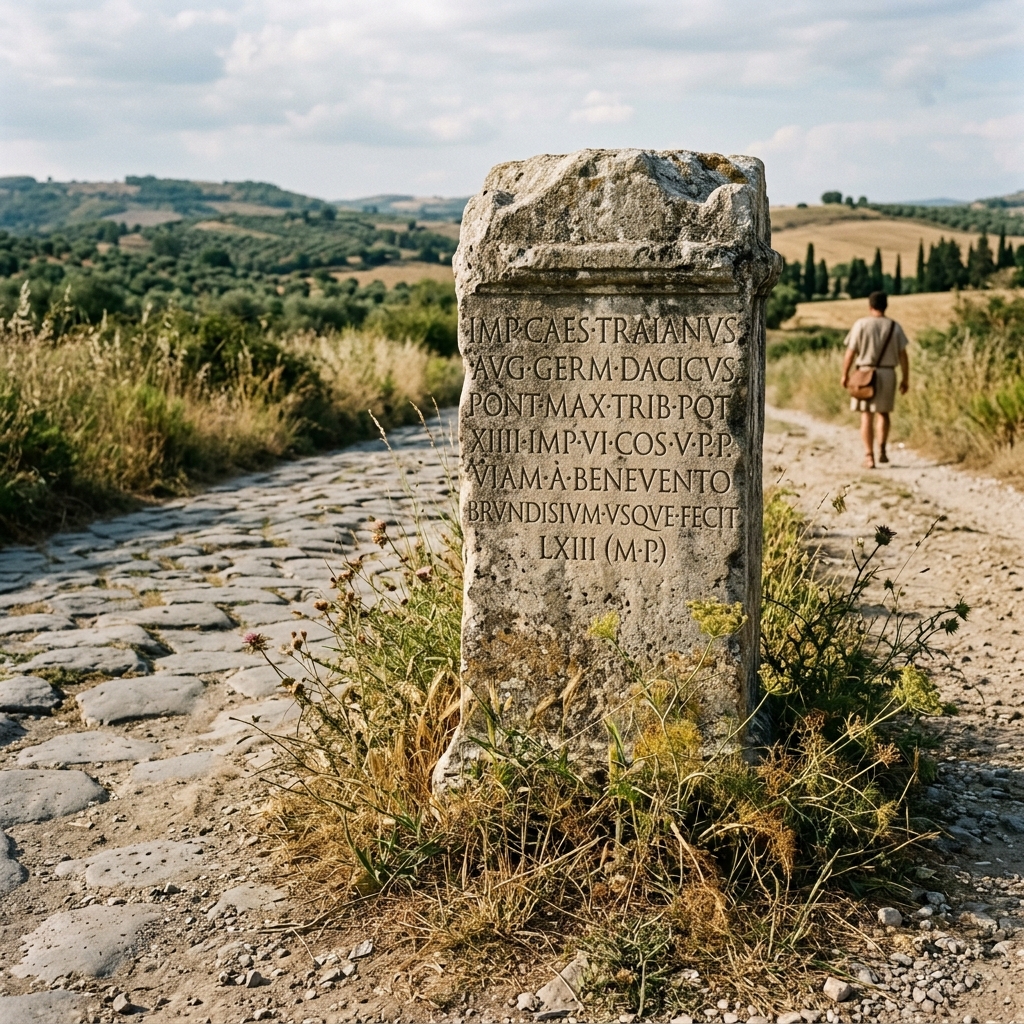
Illustration: reused existing Acts book artwork; it is an illustrative ancient road scene, not a verified reconstruction of a specific place or journey. No new image was generated for this study. The sequence graphic is HTML text and CSS for navigation and learning.